Best Drum Thrones With Backrests for Comfort and Stability
Choosing a drum throne with a backrest can dramatically improve posture, reduce fatigue, and support longer practice sessions. This guide highlights five top options that balance ergonomic saddle design, sturdy construction, and adjustable back support. Each product is evaluated for comfort, stability, and ease of use, helping you decide which throne best fits your playing style and practice needs.
| Product | Brand | Key Feature |
|---|---|---|
| AKLOT Saddle Drum Throne with Backrest (Red) | AKLOT | Saddle design, steel double-rod support, 440 LB capacity |
| AKLOT Saddle Drum Throne with Backrest (Grey) | AKLOT | Saddle design, ergonomic backrest, robust hydraulic height |
| Donner Drum Throne with Backrest | Donner | Memory foam seat, hydraulic height, ergonomic back support |
| Gibraltar Drum Throne with Backrest | Gibraltar | Memory foam seat, adjustable backrest, memory lock height |
| EASTROCK Drum Throne with Backrest | EASTROCK | Certified build, adjustable height, solid base |
AKLOT Saddle Drum Throne With Backrest (Red)

The AKLOT Red backrest drum throne combines a suede saddle seat with high-density foam for comfort and durable support. Its heavy-duty steel frame features a double-rod tripod for stability and a maximum load capacity of about 440 pounds. The hydraulic height adjusts from approximately 17 to 24 inches, and the backrest can be aligned with the seat for ergonomic support during long sessions. The design emphasizes a stylish, motorcycle-inspired look and robust construction intended for serious drummers seeking a stable, comfortable playing position.
AKLOT Saddle Drum Throne With Backrest (Grey)
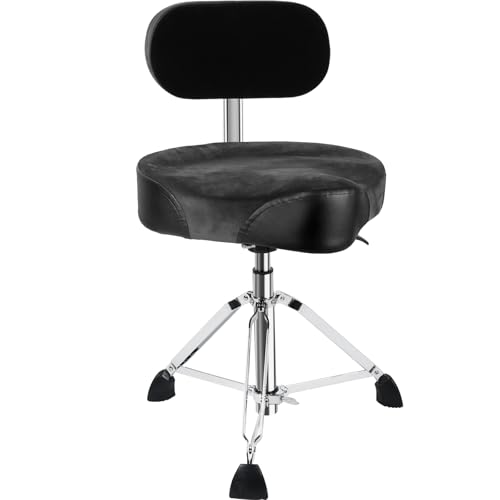
The Grey version mirrors the Red model with a suede saddle seat, high-density foam, and a sturdy steel backbone. The double-rod tripod and steel components offer durable support, capable of handling intensive practice. With the same backrest-length design and adjustable width options, this throne aims to fit players who require reliable lower-back support while maintaining a compact profile for stage and studio use.
Donner Drum Throne With Backrest

Donner’s backrest drum throne emphasizes ergonomic design with a contoured back support and a hydraulic height adjustment system for quick, precise seating. The seat uses memory foam cushioning wrapped in leather-like fabric, providing comfort across long practice sessions. This model focuses on ease of height changes and back support, making it a practical option for drummers who need reliable adjustments between different playing contexts or performers on stage.
Gibraltar Drum Throne With Backrest (9608MB)

Gibraltar’s throne features memory-foam seating for extended comfort, a backrest for lower-back support, and a memory-lock height system to lock in preferred settings. The design emphasizes long-term stability and comfort, making it suitable for studio sessions and performances where drummers need dependable posture support without frequent readjustment.
EASTROCK Drum Throne With Backrest
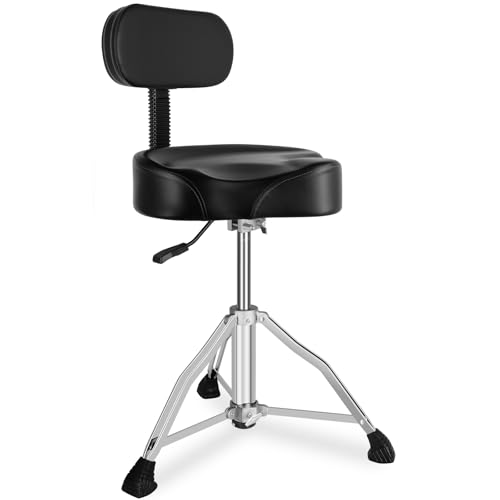
EASTROCK’s backrest throne is certified by BIFMA and SGS for reliability and safety, offering a robust build with a six- or three-position backrest alignment and a height range around 18.5 to 24.4 inches. A strong leg base with anti-slip pads helps maintain stability on various floor surfaces, and the thickened locking mechanism ensures the height stays fixed during performances. It is designed to support up to 350 pounds and suits players seeking a high-strength, certified option for regular practice and live work.
PFUGMU Drum Throne With Backrest

PFUGMU presents an ergonomic saddle-shaped seat with 3.5-inch memory foam padding and vinyl cover, combining comfort with a stable steel frame. The throne’s hydraulic system offers smooth height adjustment from 17 to 24 inches, while the double-braced base and non-slip feet provide solid stability. This option aims to deliver a balanced mix of comfort, durability, and user-friendly adjustments for heavy practice sessions.
Buying Guide: Key Purchase Considerations And Comparisons
When selecting a drum throne with a backrest, several factors influence long-term comfort and performance. Here are the main considerations to help you compare options:
- Seat design and cushion: Saddle seats are popular for reducing perineal pressure and promoting a natural hip tilt. Look for high-density foam and fabric or faux leather that match your climate and playing style.
- Backrest adjustability: A backrest that can be moved up, down, or angled supports the lower back and spine alignment. Check the range of adjustment and whether it locks securely during sessions.
- Height range and stability: A broad height range accommodates players of different statures and setups. A double-rod or triple-rod tripod enhances stability under vigorous striking.
- Weight capacity: Ensure the throne supports your body weight plus gear, especially for heavier players. Most models target 350–440 pounds, with some industrial designs exceeding that range.
- Build quality and materials: Steel frames offer durability; memory foam cushions improve comfort. Memory locks or similar mechanisms help maintain chosen heights during performances.
- Portability and setup: Consider weight, wheel options, and how easily the throne disassembles or stores for gigs. Stable bases with anti-slip feet reduce floor damage and movement on stage.
- Ergonomic features: Side padding, contoured seat shapes, and lumbar support contribute to posture, reducing fatigue during long practice sessions or performances.
- Maintenance: Look for surfaces that are easy to clean and resist sweat and grime from frequent playing.
In this selection, all five thrones emphasize ergonomic back support, adjustable heights, and sturdy construction. The AKLOT models showcase bold saddle designs with robust metal supports, while Donner, Gibraltar, EASTROCK, and PFUGMU each bring distinct backrest mechanisms, padding options, and stability features. Depending on whether you prioritize memory-foam seating, certified build quality, or a higher weight capacity, there are viable choices for various drumming environments—studio, rehearsal, or live performance.