Best Plastic Room Divider With Door for Flexible Space Crafting
Creating separate spaces without walls can be simple and stylish with plastic room dividers that include a door or doorway feature. This guide highlights five top options, focusing on clear visibility, portability, and easy setup—ideal for homes, offices, dorms, and studios. Below you’ll find quick product overviews, buying considerations, and practical usage tips to help you choose the right divider for your space.
| Product | Brand | Type | Material | Panel Count | Best For |
|---|---|---|---|---|---|
| 4 ft. Short Clear Plastic Partition White 3 Panel | Red Lantern | Plastic Partition | Clear Plastic | 3 | Desktop or countertop divison |
| 2 Pack 48″ x 84″ Zippered Plastic Doorway Cover | TOHARA | Doorway Cover | Clear Plastic EVA | 2 Panels | Renovation and temporary rooms |
| Goovilla Room Divider for Room Separation | Goovilla | Freestanding Room Divider | Fabric over Frame | 4-10 ft adjustable | Temporary privacy in living areas |
| FDW Room Divider 6FT Wall Divider | FDW | Wood Screen | Wood | 4 panels | Traditional wood look and room separation |
| MAYOLIAH 6 Panel Folding Privacy Screen | MAYOLIAH | Folding Screen | Fabric | 6 | Large, flexible partition |
4 ft. Short Clear Plastic Partition White 3 Panel

The 4 ft. Short Clear Plastic Partition is a compact, lightweight option designed for smaller spaces. Its transparent design maintains visual connectivity while creating a distinct personal space on desks, counters, or workstations. The three-panel configuration offers versatile positioning and can be easily folded for storage. Cleaning is straightforward, ensuring a hygienic workspace in homes and offices alike.
Room Divider and Folding Privacy Screens, 8 Panel Wide Room Divider

The HOMSCREENER 8-panel divider is designed for large-scale room separation. While not purely plastic, it’s a versatile option if you need a modular wall that can extend up to 176 inches wide. Panels can be unhooked and rearranged, allowing you to tailor the setup to 1, 2, 3, up to 8 sections. Built with a rugged fabric surface and a stable frame, it’s suitable for bedrooms, living spaces, or studio environments where flexible privacy is essential.
Goovilla Room Divider for Room Separation

Goovilla’s tension-based, freestanding divider offers a no-drill solution for creating private spaces. While it uses fabric panels, its tension-mounted framework provides stability and easy rearrangement without wall damage. The system is suitable for apartments, dorms, or offices where quick setup and repositioning are a priority. It’s particularly useful for temporarily defining zones in open-plan areas or creating a quiet corner for work or relaxation.
FDW Room Divider 6FT Wall Divider
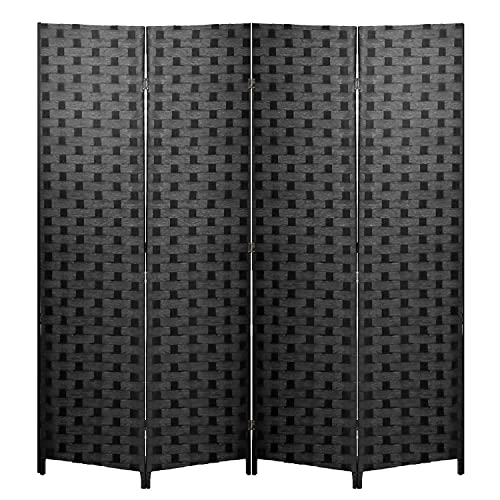
The FDW 6FT Wood Screen provides a more traditional look for dividing spaces. Composed of four hinged panels, it folds flat for storage and can be arranged to fit different room shapes. The wooden design offers a sturdy, durable option that pairs well with classic or contemporary interiors, making it a functional choice for studios, living rooms, or office partitions where a warmer aesthetic is desired.
MAYOLIAH 6 Panel Folding Privacy Screen

The MAYOLIAH 6-panel folding privacy screen offers a wide, flexible partition option with a maximum expanded width of 120 inches. It’s designed for quick setup, easy storage, and versatile use—great for creating temporary rooms, blocking sunlight, or organizing large living areas. The folding design lets you reconfigure the space rapidly as needs change.
Buying Guide
Key purchase considerations when selecting a plastic room divider with a door or doorway capability:
- Material and durability: Clear plastic partitions are lightweight and easy to clean, while fabric or wood screens offer more privacy and sound dampening. Consider where the divider will be used (home, office, workshop) and how often you’ll move it.
- Panel configuration and size: Panels range from 2 to 8 or more. Measure your space and think about desired coverage, door openings, and how the panels will fold or stack for storage.
- Stability and mounting: Freestanding dividers with wide footplates or weighted bases stay put on busy floors. If you cannot mark walls, tension-based or clamp-on systems can be ideal, though they might be less stable in high-traffic areas.
- Transparency and privacy: Clear plastic provides visibility and light diffusion, while frosted or fabric panels offer more privacy. Choose based on your need for openness versus seclusion.
- Portability: Lightweight options with foldable designs are easier to relocate. If you plan to move the divider between rooms or sites, prioritize models with compact storage.
- Ease of cleaning: Plastic and vinyl surfaces are typically easy to wipe down; fabric panels may require occasional spot cleaning or vacuuming.
- Installation requirements: Some models require no tools (tension-based) while others may include hinges, anchors, or tracks. Ensure the method aligns with your living or office space and rental rules.
- Safety and accessibility: For doorway-use models, check for smooth edges and stable frames to avoid trips or snagging clothing. If pets or children are present, choose materials with robust construction and non-toxic finishes.
For optimal results, blend different divider types in larger spaces: use clear plastic for transparent zones near workstations, fabric or wood screens for private corners, and modular designs for flexible configuration. Regularly inspect hinges, connectors, and bases to maintain safety and functionality.