Best White Melamine Shelf Boards for Cabinets, Closets, and Storage
The best white melamine shelf board depends on whether you need a standard replacement size or a board cut to fit a specific opening. SHELFIX is suited to custom 3/4-inch shelves, PHILLCO offers fine-grained size options, and SSWBasics is a straightforward 36-by-12-inch board. B&B HARDWARE offers a choice of thicknesses, while Bambüsi is the option to consider for a thicker, 1-inch shelf.
| Product | Best For | Key Detail |
|---|---|---|
| SHELFIX | Custom-fit 3/4-inch shelves | Made to requested dimensions |
| PHILLCO | Precise custom sizing | Dimensions in 1/16-inch increments |
| SSWBasics | Standard replacement boards | 36 × 12 inches, 3/4-inch thick |
| B&B HARDWARE | Thickness choice | Available in 1/2 and 3/4 inch |
| Bambüsi | Thicker custom shelves | 1-inch board; rectangular cuts only |
SHELFIX Custom 3/4-Inch White Shelf

Best for: Buyers replacing a shelf in an opening that does not match a standard board size. SHELFIX makes its white, 3/4-inch shelves to requested dimensions, which can help with cabinet, kitchen, or bookshelf projects. The listed features describe the boards as sturdy and suitable for everyday storage uses.
Choose this if you want a custom-cut board with a familiar 3/4-inch thickness. Because the product is customized, measure the opening carefully before ordering; the listing does not provide specific weight limits or cutout options.
PHILLCO Precisely Sized Melamine Shelf

Best for: Shoppers who need a close fit and want to enter dimensions in small increments. PHILLCO offers 3/4-inch melamine shelves from 6 to 65 inches wide and 6 to 24 inches deep, with size selection in 1/16-inch increments. The listing also describes the furniture board as scratch resistant, stain resistant, and easy to clean.
This is a better fit for a nonstandard cabinet or closet opening than a fixed-size board. Check the selected color and dimensions before checkout, since the listing offers multiple finishes and the board is made to order.
SSWBasics 36-by-12-Inch Shelf Board

Best for: Buyers whose project calls for a standard 36-by-12-inch board. This shelf is 3/4 inch thick and uses particleboard with a white melamine finish. The fixed dimensions make it a simple option for replacement shelves, retail displays, or other storage projects when the measurements match.
Choose this if you do not need custom sizing. The listing specifies use with existing or separate 12-inch brackets, which are sold separately, so confirm your support setup before ordering.
B&B HARDWARE Custom Cabinet Shelf
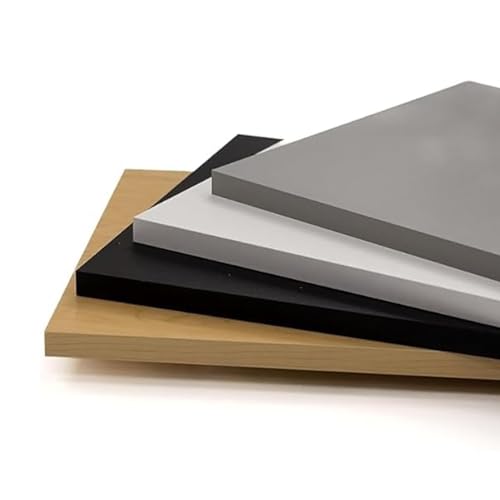
Best for: Buyers who want to choose between 1/2-inch and 3/4-inch thicknesses. B&B HARDWARE offers cut-to-size melamine shelving up to 60 inches and describes it for kitchens, pantries, closets, offices, and other storage areas. The smooth surface is described as easy to clean and maintain.
This option is useful when matching the shelf thickness to an existing cabinet or storage system matters. Verify the available dimensions, finish, and thickness when selecting the custom configuration; the listing does not state a load capacity.
Bambüsi One-Inch Custom Shelf Board

Best for: Buyers who specifically need a thicker 1-inch shelf. Bambüsi describes its board as melamine over a dense engineered-wood core and offers custom dimensions up to 108 by 36 inches. It is designed to sit on existing shelf pins, brackets, or side rails, so the listing says no mounting hardware is included.
Choose this if a thicker board suits your project and the opening is rectangular. The product does not accommodate corner notches or L-shaped cuts, and the listing says custom-cut shelves cannot be returned. Measure carefully before ordering.
Buying Guide: How to Choose a White Melamine Shelf Board
Should you choose a standard size or a custom-cut board?
A fixed-size board can be convenient when its length and depth match your existing shelf. The SSWBasics option measures 36 by 12 inches. For an unusual opening, custom-cut options such as SHELFIX, PHILLCO, B&B HARDWARE, or Bambüsi let you specify dimensions. Measure the opening in more than one place, especially if the sides are not perfectly parallel.
Which thickness is right for the project?
Compare the board thickness with the shelf supports and the thickness of any shelf being replaced. The listed choices include 1/2 inch, 3/4 inch, and 1 inch. A thicker board may be preferable when you need a substantial shelf, but thickness alone does not establish a board’s safe load. Check product specifications and consider the shelf span and support arrangement.
What should you check before ordering?
- Confirm the shelf’s width, depth, and thickness against your cabinet or closet measurements.
- Check whether the board is fixed-size or customized, and review the available finish options.
- Confirm whether brackets or other support hardware are included. SSWBasics states that brackets are sold separately.
- Check cut limitations and return terms for custom products. Bambüsi states that its custom cuts are rectangular and cannot be returned.
- Make sure the board’s dimensions work with the existing shelf pins, brackets, or rails.
Frequently Asked Questions
What is a white melamine shelf board made from?
These products generally use an engineered wood or particleboard core with a melamine surface. The specific core and construction vary by product, so check the individual listing.
Can I order a white melamine shelf cut to size?
Yes. SHELFIX, PHILLCO, B&B HARDWARE, and Bambüsi list custom-cut options. Their size ranges and cut limitations differ.
Are shelf brackets included?
Not necessarily. SSWBasics says brackets are sold separately. Check the product details for any other board before assuming supports are included.
How do I measure for a replacement shelf?
Measure the opening’s usable width and depth, then confirm the required thickness and support style. For custom boards, use the seller’s measurement instructions and double-check the numbers before submitting the order.
Is a thicker shelf always stronger?
Thickness is one factor, but the core material, span, and support placement also matter. Do not assume a specific load capacity unless the product listing provides one.